End-to-End Purchase journey
Beyond Banking: The journey to disrupt a Business Model
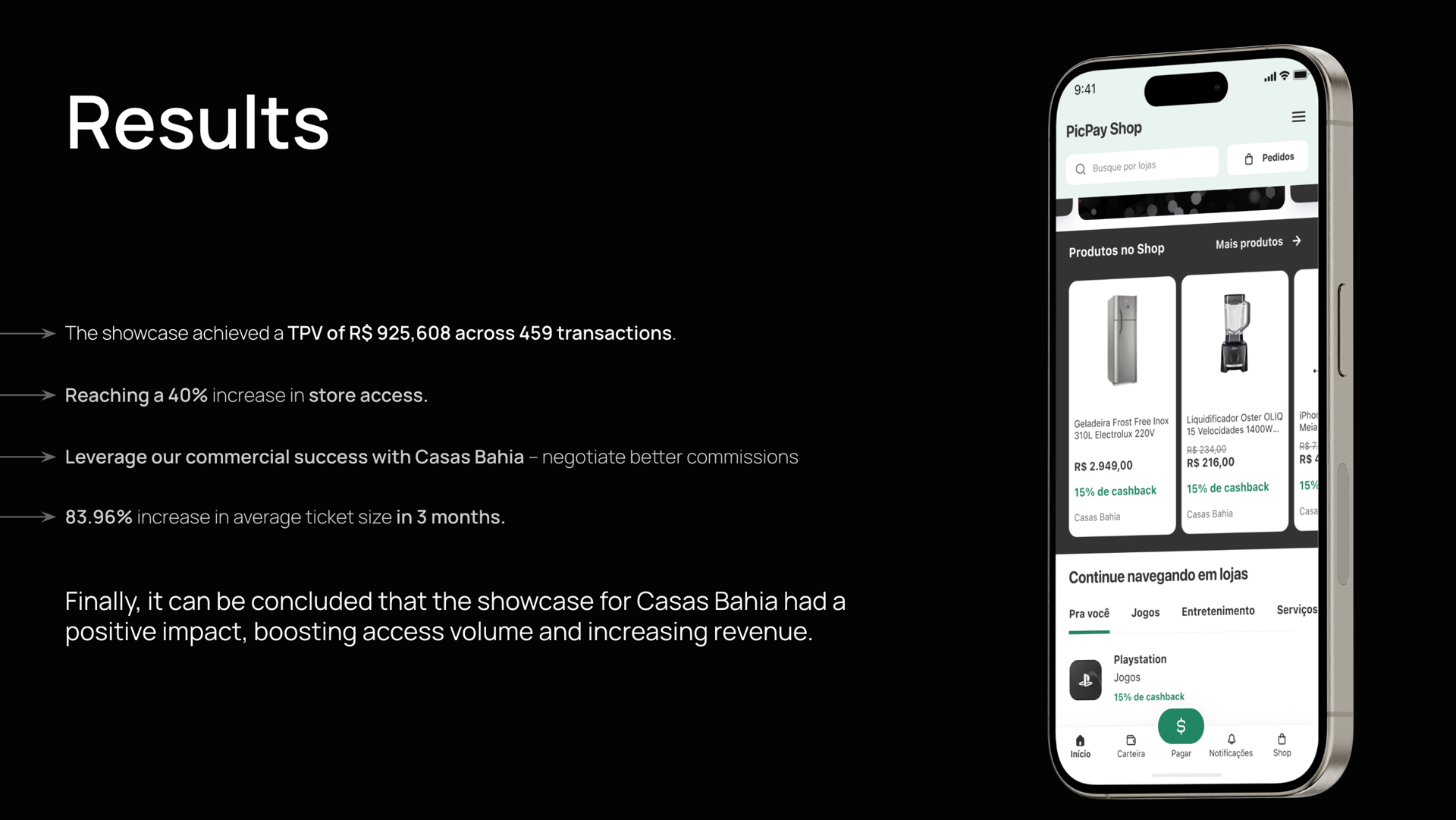
83.96% increase in average ticket size in 3 months.
40% increase in store access.
And how these numbers reflect on the user journey.
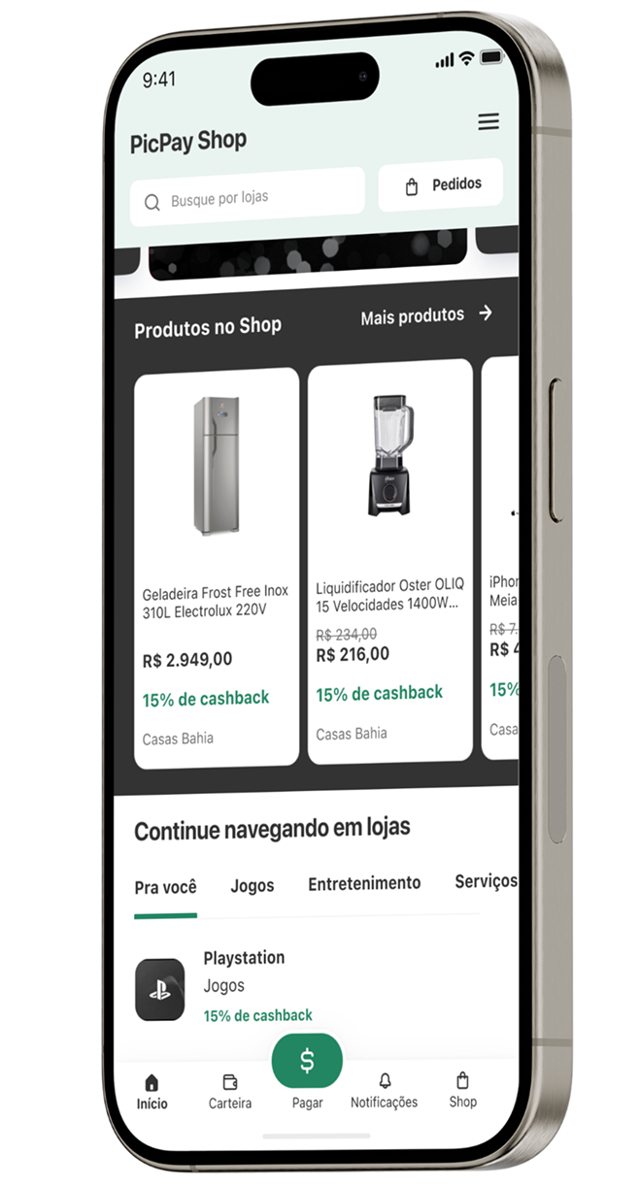
Rebuilding PicPay Shop as a marketplace
Context & Goal
Status Quo
PicPay Shop operated through an affiliate sales model. Users discovered stores and offers inside PicPay, but were redirected to the seller’s landing page to complete the purchase.
This created a fragmented journey, limited influence over conversion, and made the business struggle for efficiency.
Goal
To evolve PicPay Shop from an affiliate redirect model into an end-to-end purchase experience with SKUs and internal checkout.
By keeping users inside PicPay, we could increase conversion potential, generate more qualified leads for partner stores, and make PicPay’s payment options a core revenue driver.
Why it mattered
The current journey had a major conversion gap: 92% of users did not buy after reaching the partner’s landing page.
Bringing products and checkout into PicPay meant getting closer to the moment of purchase, improving the user experience, and increasing the business’ ability to influence outcomes.
But why now
The initiative aligned with PicPay’s Beyond Banking strategy and the marketplace pilot.
It also created an opportunity to strengthen partnerships with retailers, negotiate better commissions, and introduce financial products within the retail journey.
Potential risks
The main risks were the high implementation cost, rollout complexity, and the possibility that the effort would not translate into meaningful business impact.
Team
The initiative required a multidisciplinary team across Product Design, Product Management, Tech, Sales, Data, Strategy, Backend, Android, and iOS.
The Process
Value Engineering
Before moving into solution design, we reframed the opportunity from a business model perspective.
The main question was how PicPay Shop could evolve beyond affiliate revenue and grow vertically in TPV, commission, and user value.
This led us to explore a broader direction: what retail products could become inside a banking ecosystem, and which user Jobs To Be Done we could better serve by being both a bank and a shop.
Market timing
+$7 trillion projected in online retail sales by 2025 and Beyond Banking strategy.
Business overview
Previous internal tests: SKU showcase / 1 month / 100% users impacted
- Achieved a 40% uplift in access
- Reached 2.4k in revenue and 160k in TPV incrementally
- During the display of the SKU showcase to 100% of the user base in May '23, a 1.6% CTR was achieved (87k product accesses without cannibalizing traffic to the stores)
Future of the sector
Marketplace: a stronger partnership for retailers. A more convenient experience for the user.
We are key for retailers
As brand loyalty fades, partnerships grow in value.
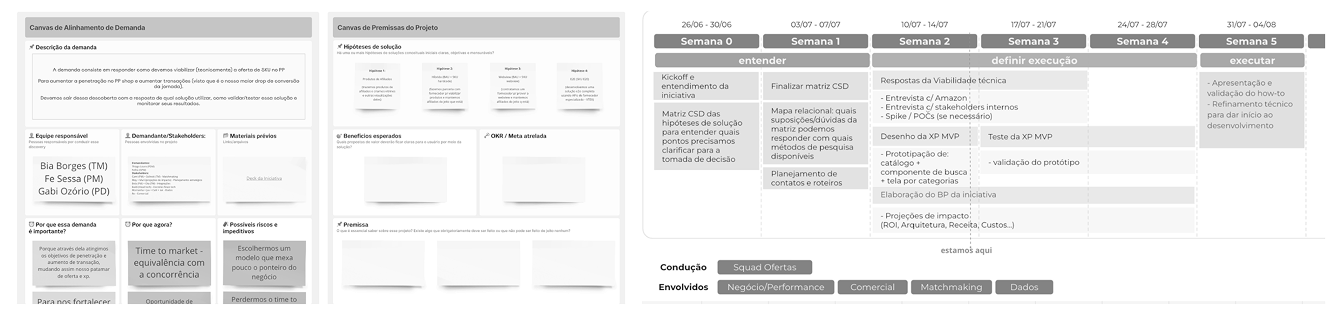
Kickoff
We aligned Product, Design, Tech, Business, and Strategy around a shared roadmap.
The first step was not to build the full end-to-end journey immediately, but to create a phased path:
Now: introduce SKUs into the user journey. Next: improve product assortment. Later: enable a full end-to-end purchase experience.
This helped create consensus, reduce ambiguity, and define what “done” meant for the first release.
Understanding
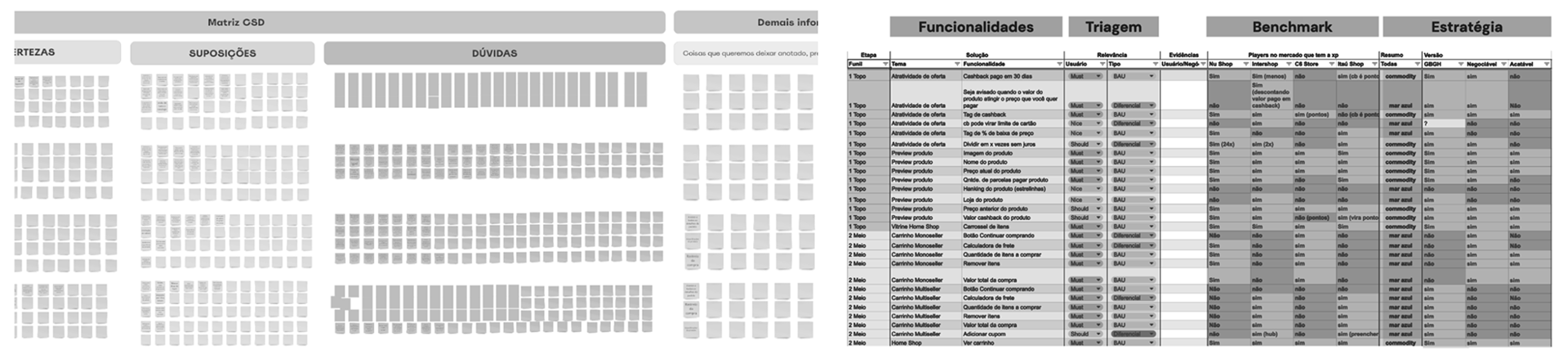
To design the right thing, we combined business alignment with user and market research.
We ran a CSD matrix workshop, benchmarked competitors, mapped use cases, analyzed the current store and product findability experience, and studied the conversion funnel.
The goal was to understand where users were already close to purchase — and where PicPay could influence the journey more directly.
Problem Space
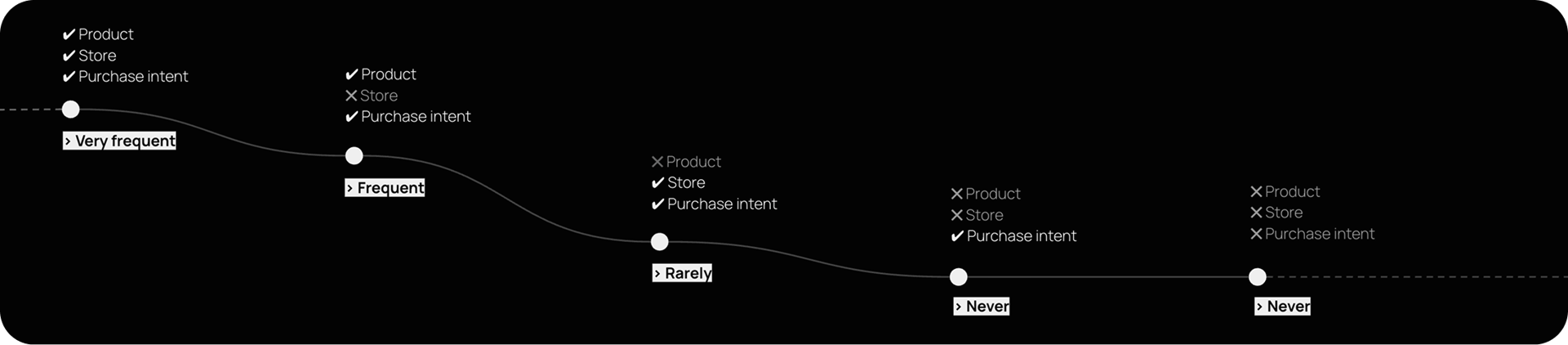
A use case research showed that many users were already highly intentional.
77.5% of users frequently knew the details of the item they wanted, such as model, color, storage, or other specific characteristics.
This revealed two priority opportunities:
- Serve users who already know the product and store through the end of the funnel.
- Help users who know the product, but not the store, convert through product details, image appeal, and better findability.
The opportunity was clear: PicPay Shop could move closer to the purchase decision by exposing SKUs earlier and helping users convert before they left the app.
Defining the Solution
After identifying the opportunity, we moved from discovery to definition.
The main goal was to make the initiative feasible across business, design, tech, data, legal, and operations — not only desirable from a user perspective.
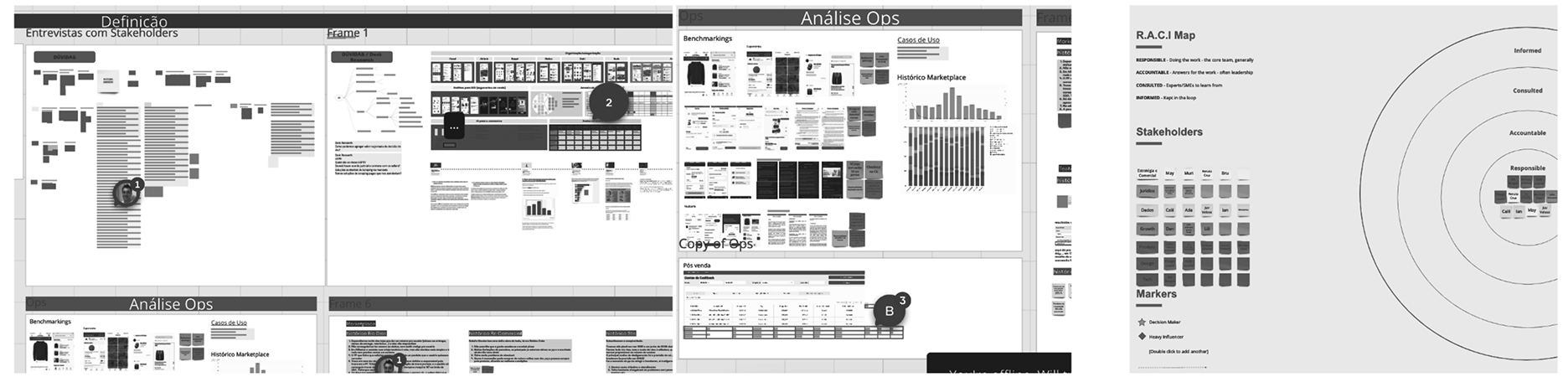
Alignment and decision-making
We interviewed stakeholders across areas to understand constraints, dependencies, and rollout risks.
This helped us define the user journey, align on what would be part of the MVP, and clarify what could be negotiated or postponed.
Sustainability plan
To make the product scalable, we mapped the full operating model behind the experience.
The solution depended on four pillars:
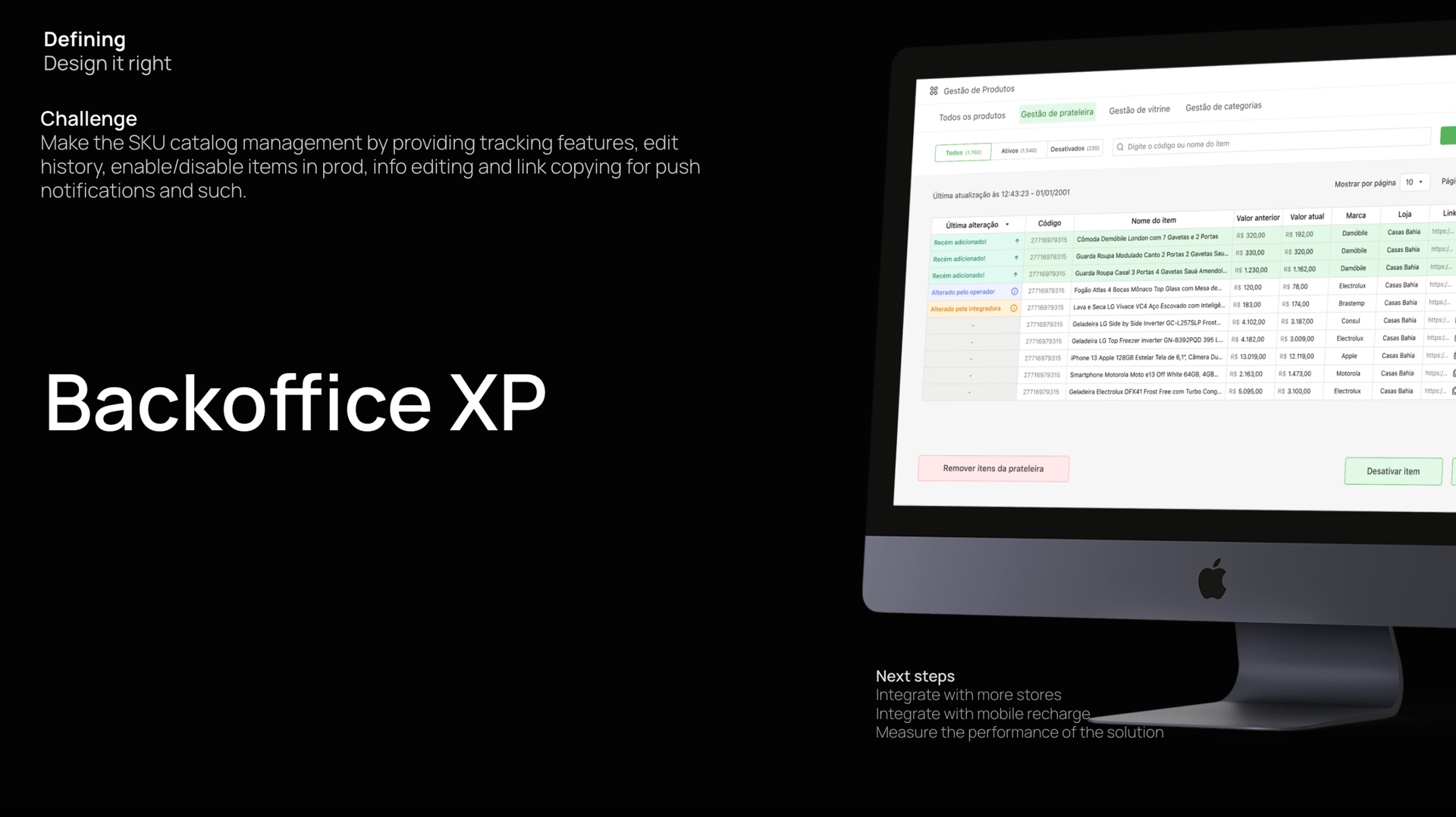
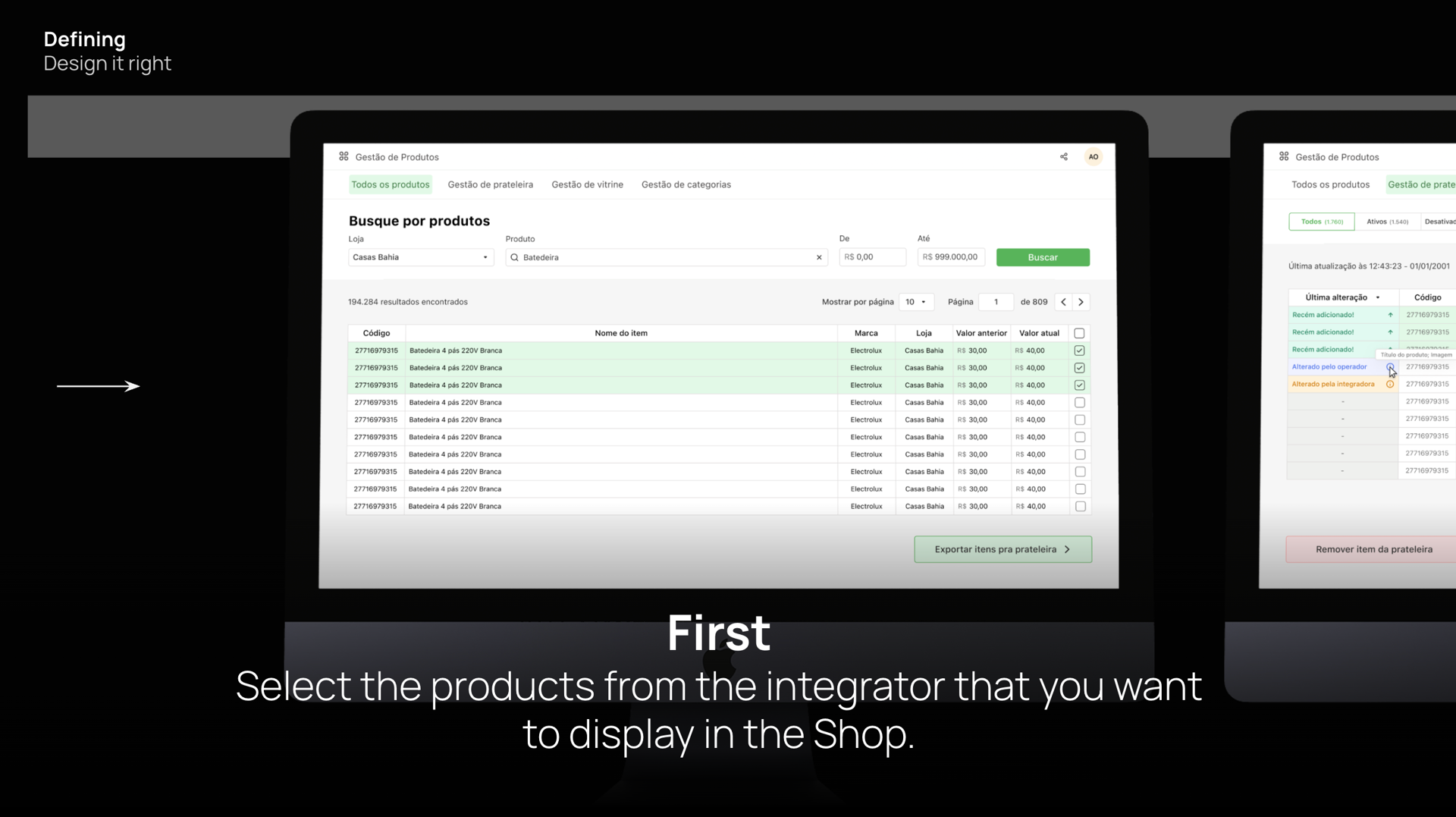
- Data integration — ingesting, processing, and cataloging SKU data.
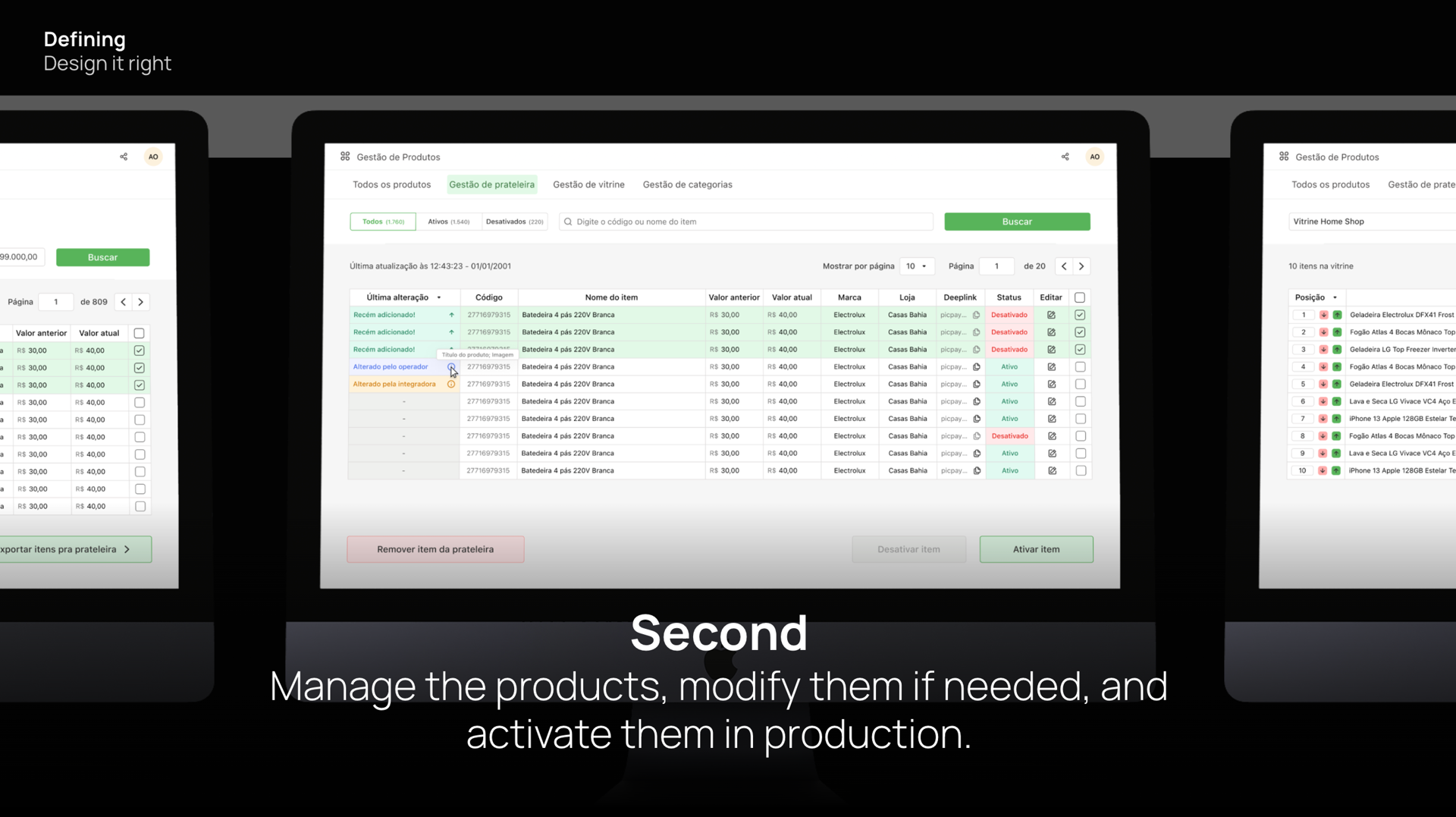
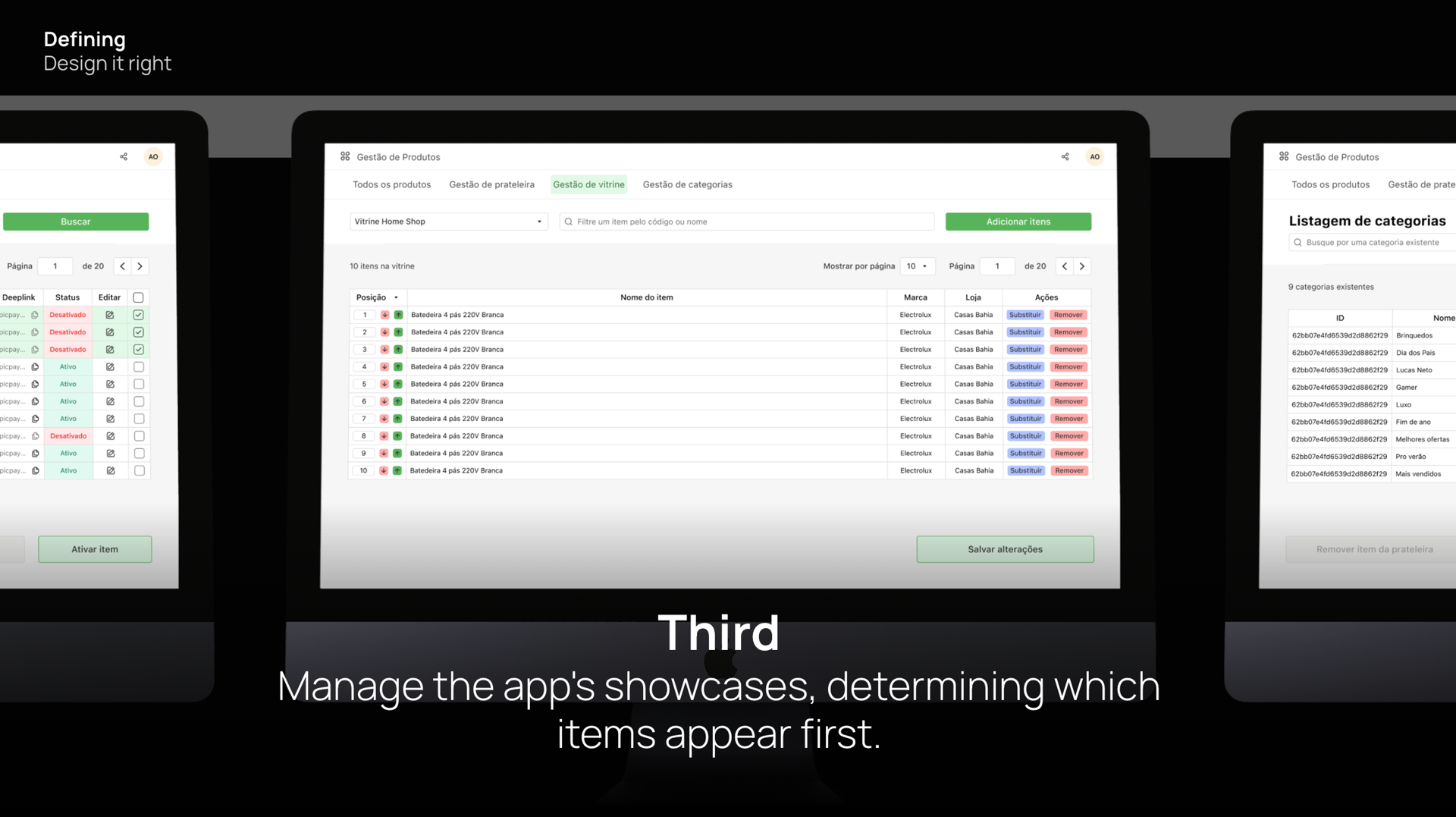
- Catalog experience and curation — verifying information and deciding which offers to display.
- User journey in app — presenting products in a clear and useful way.
- Support — maintaining offers and handling post-sales operations.
This reduced ambiguity, clarified ownership, and helped prevent gaps between teams.
Experience pillars
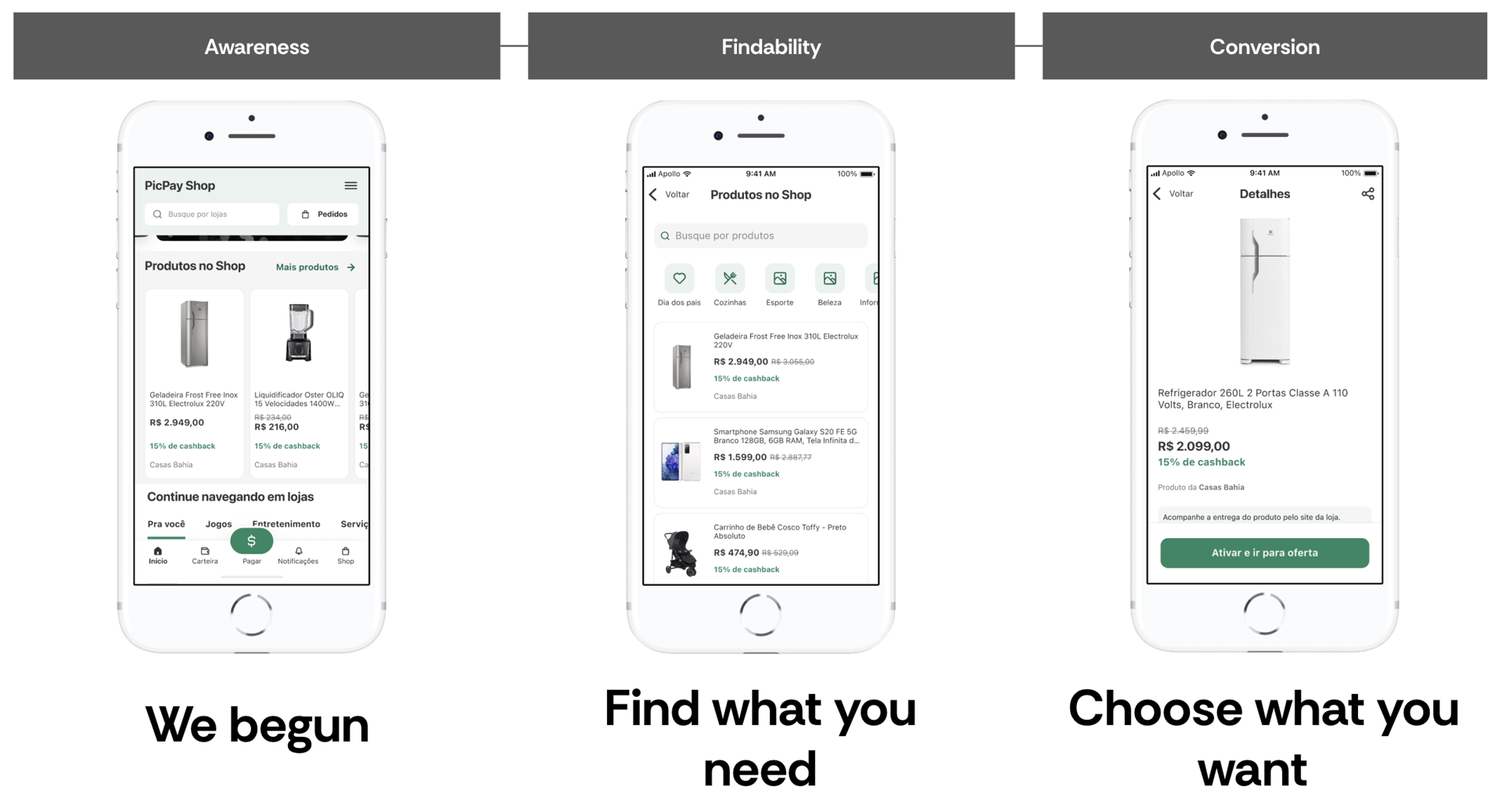
From the user perspective, the journey was structured around three key moments:
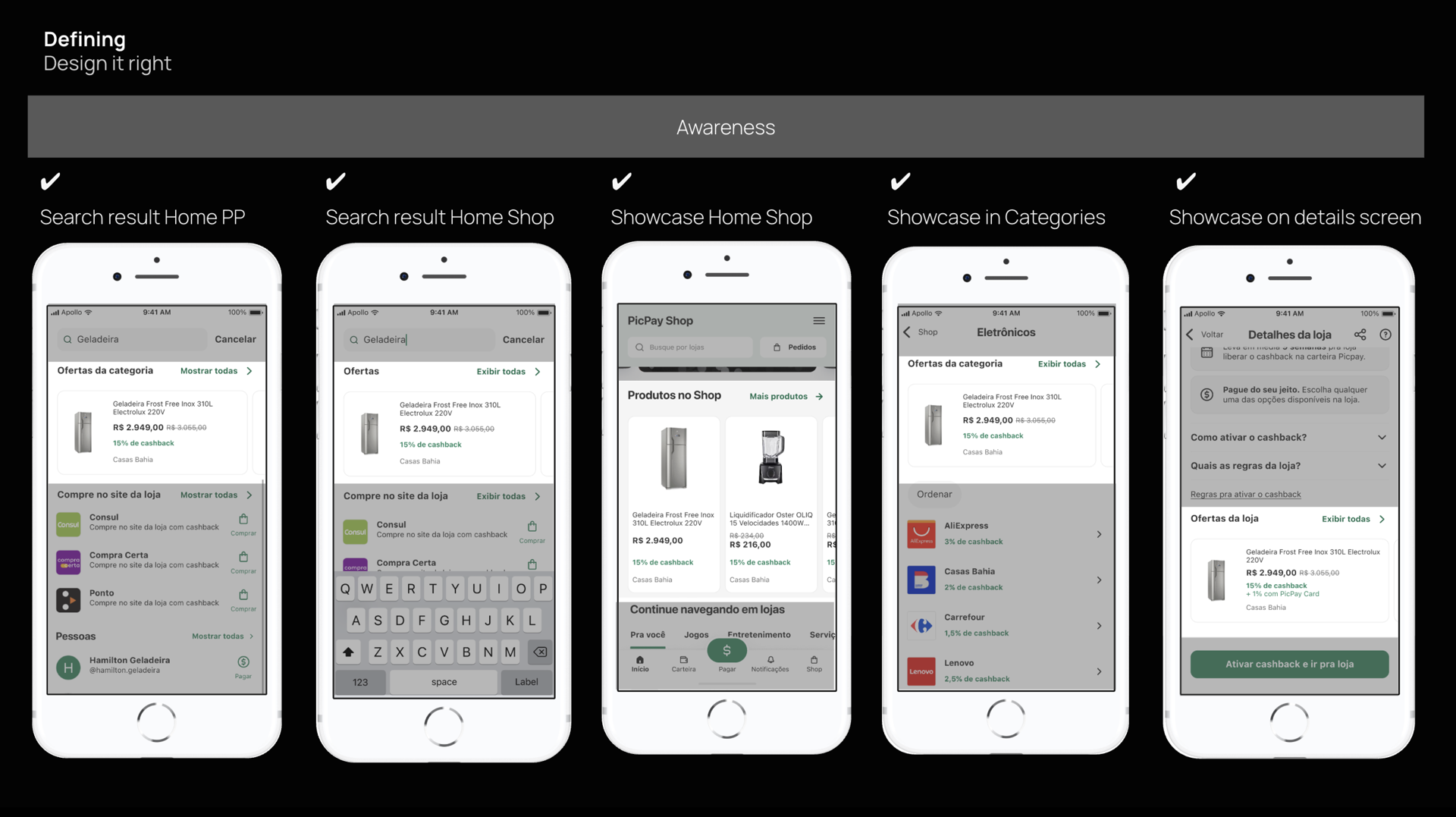
Awareness
Make users aware that products are available inside PicPay Shop.
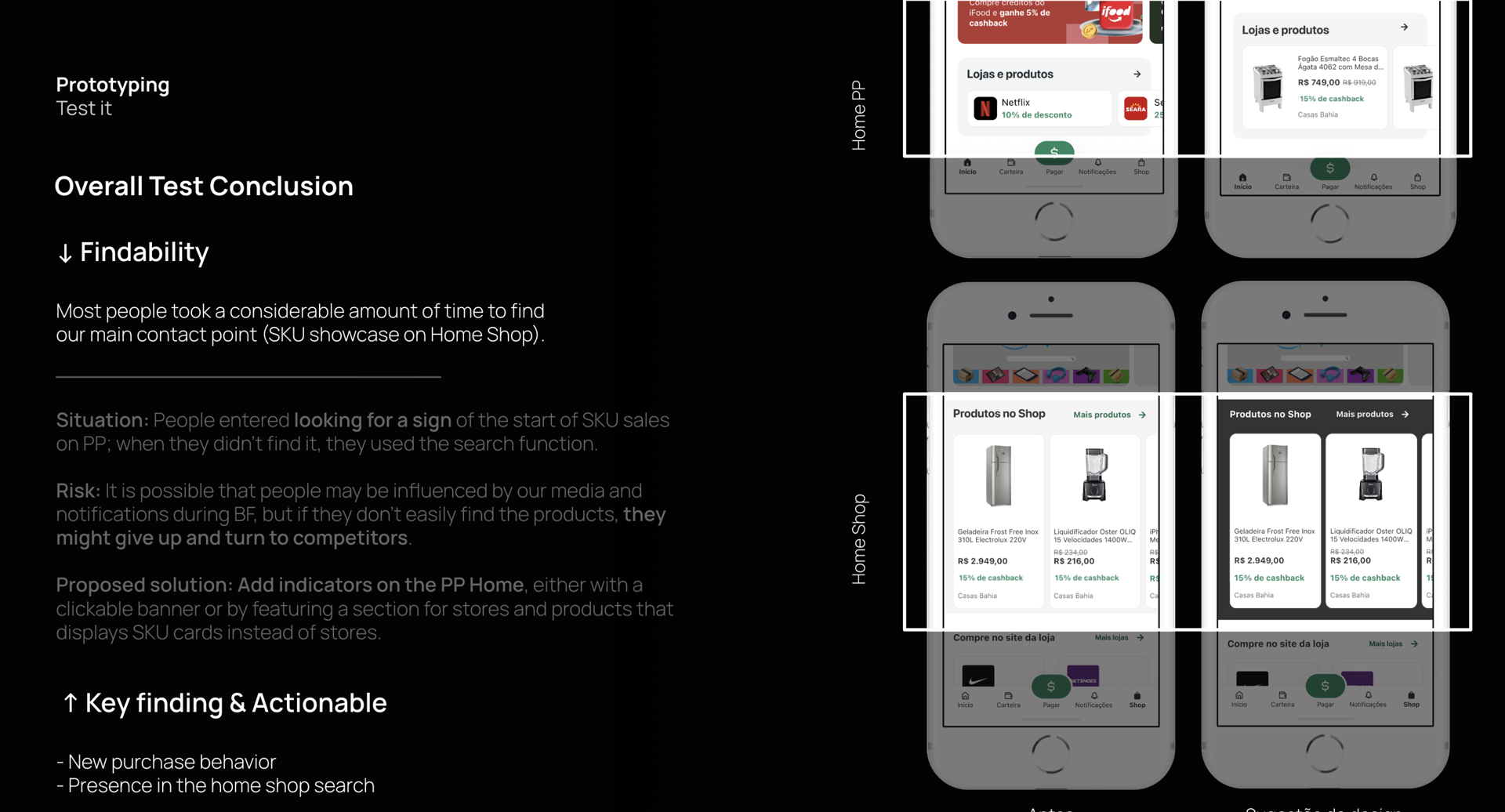
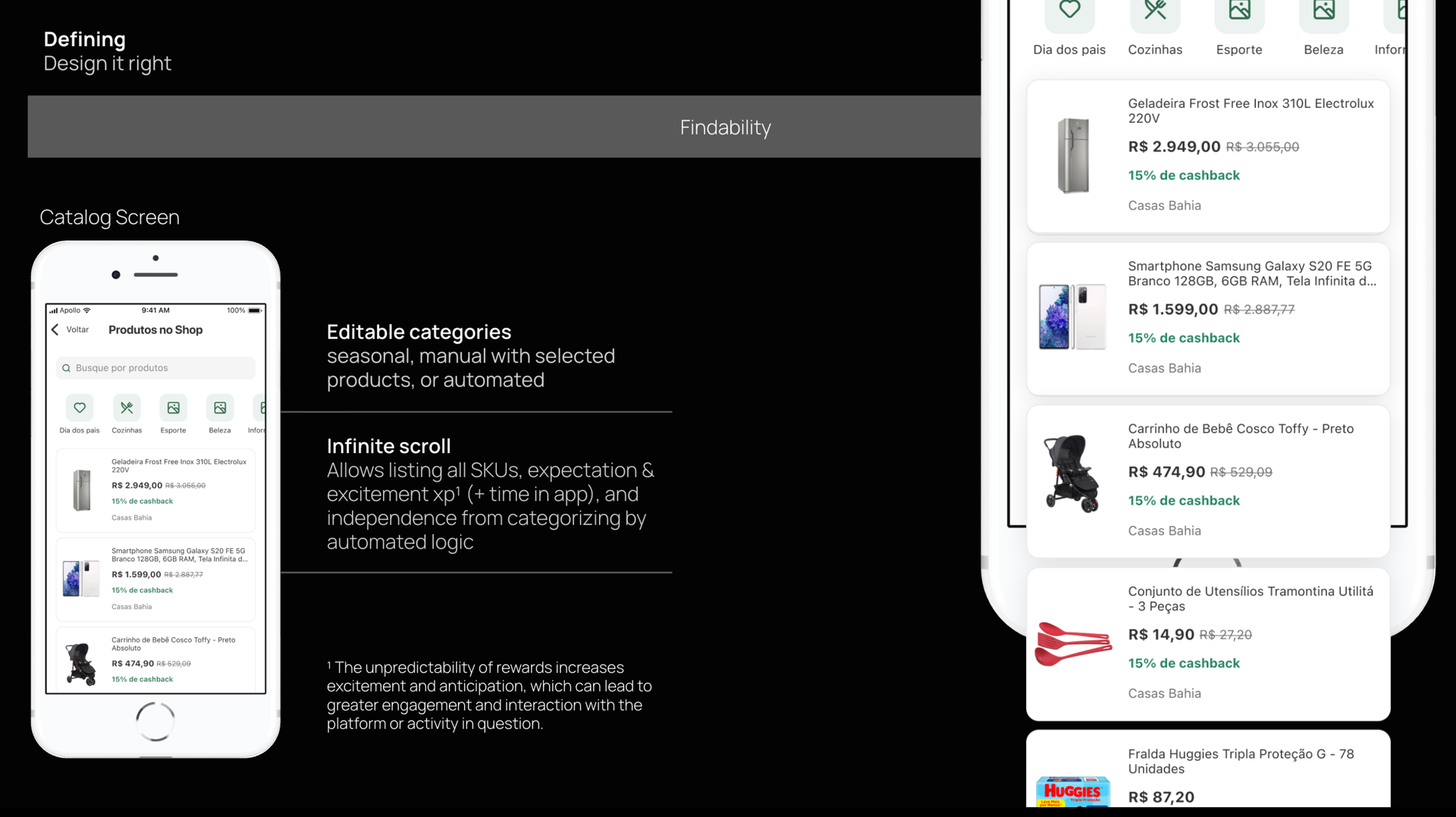
Findability
Help users find the product they are looking for.
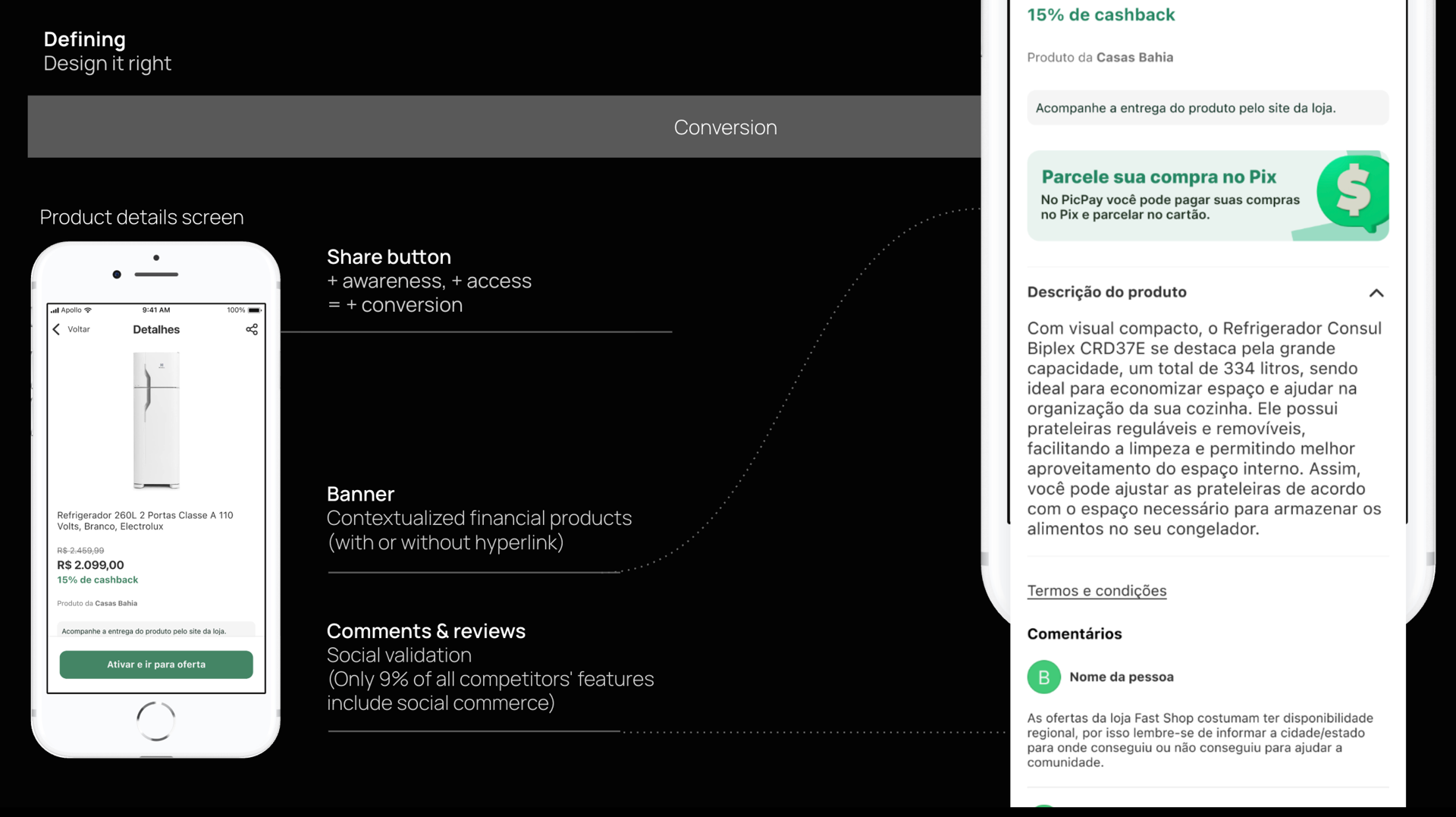
Conversion
Support the decision-making moment with product details, offer clarity, and purchase intent.
These pillars guided the MVP and helped translate a complex business model shift into a usable product experience.
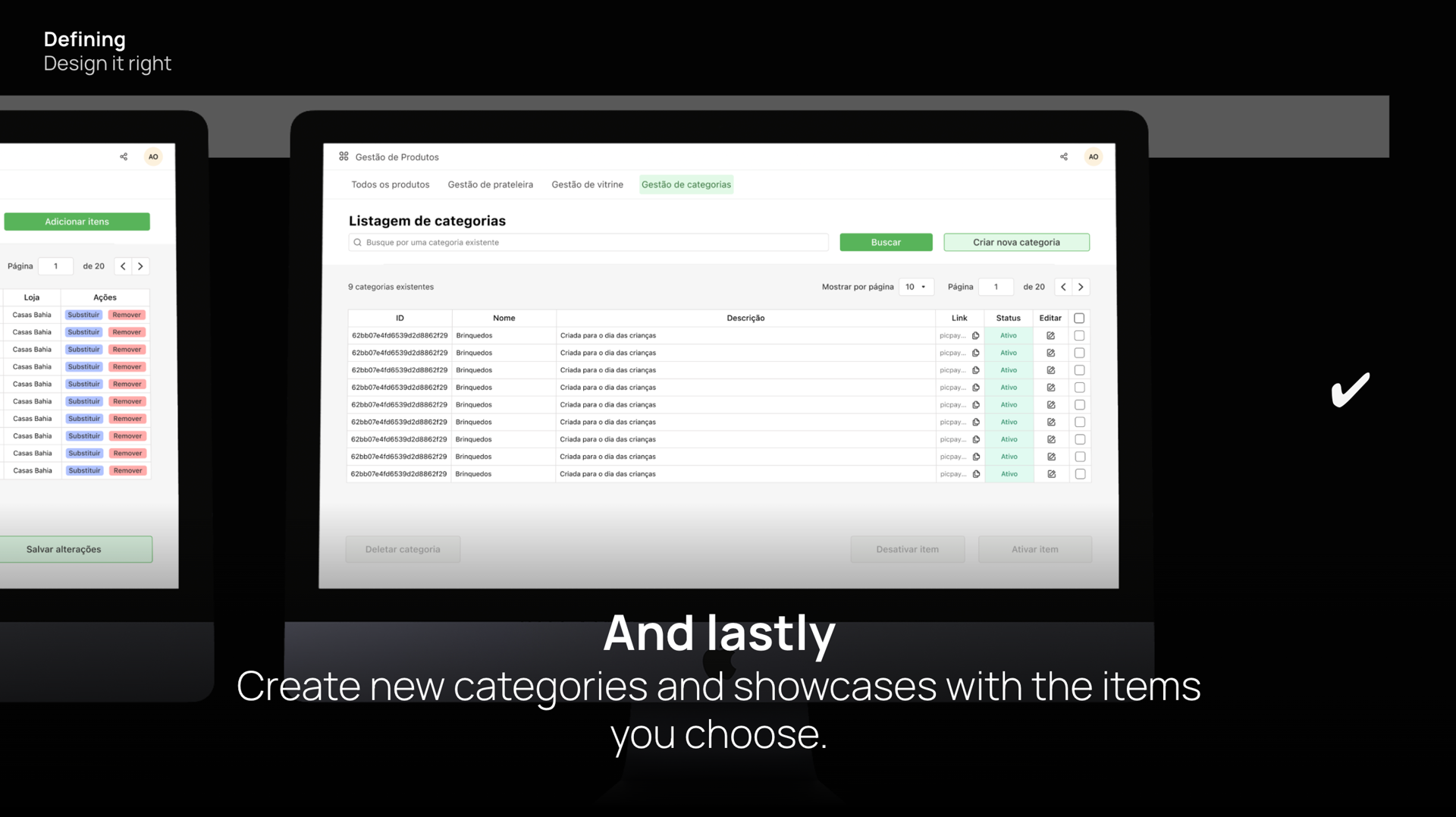
Prototyping & Testing
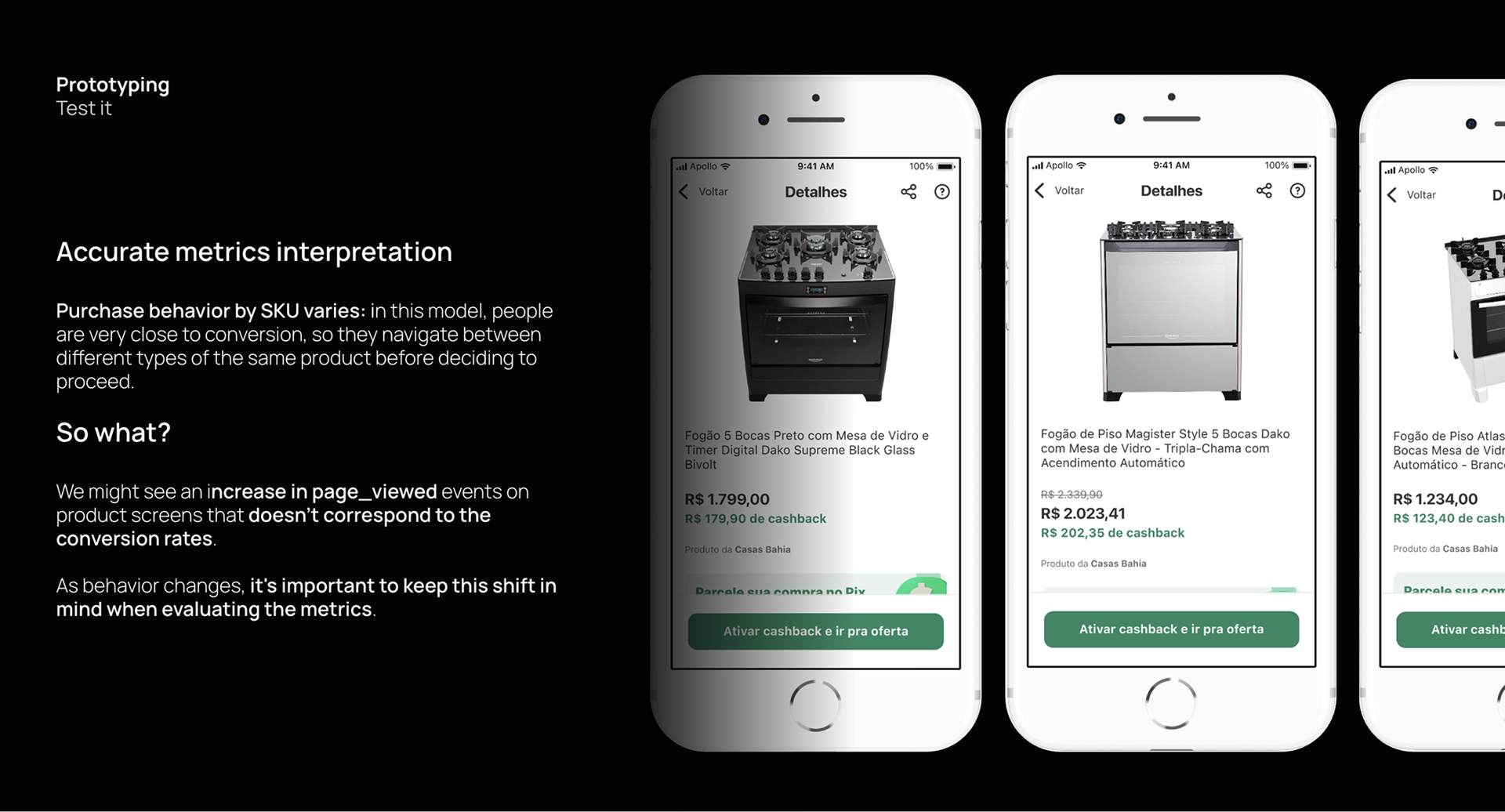
After defining the main journey, we tested the experience with 6 participants to validate whether users could understand and navigate the new SKU flow.
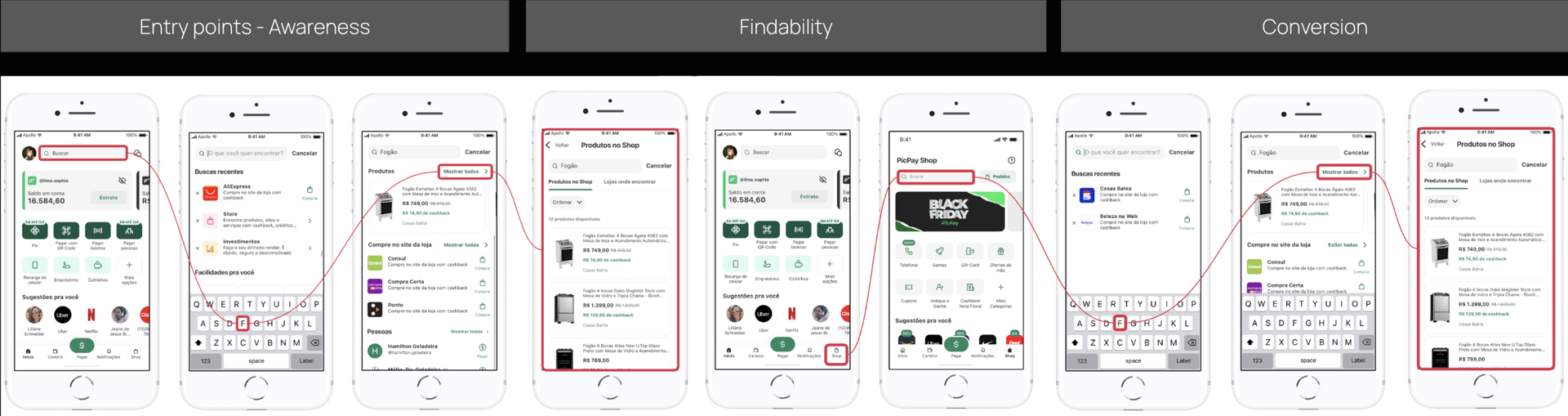
The prototype covered the three key moments of the journey:
Awareness — how users discover that products are available inside PicPay Shop. Findability — how easily users can find the product they are looking for. Conversion — how clearly users understand the offer and move toward purchase.
The test helped us identify friction points, summarize key insights, and align design recommendations with the teams impacted by the rollout.
From there, we refined the experience before moving into the Black Friday release.
Prototyping & Testing
The MVP was launched during Black Friday, supported by commercial negotiation with Casas Bahia and a dedicated performance monitoring setup.
Before release, we defined the main validation metrics and created dashboards to track whether the SKU experience was increasing access, conversion, and revenue.
The launch was treated as the start of continuous discovery: a way to learn fast from real user behavior and use performance data to guide the next iterations.