Behavioral Design at Scale
+145% Payment Conversion

Challenge
High friction and drop-off in Cross-sell
Post-purchase offers (Hotmart Top Picks) were seeing low conversion rates on the "Thank You Page," primarily due to usability barriers and the complexity of the PIX payment flow.
Solution
Behavioral Science-driven Redesign
A complete overhaul of the experience (modal/bottom-sheet) focused on reducing cognitive load. I applied Prospect Theory heuristics to shift copy from transactional to emotional and corrected critical navigation affordances.
Result
🚀 +145% PIX Conversion 💳 +137% Credit Card Conversion 💰 +225% Net GMV/session
Context & Opportunity
The product
Hotmart Top Picks: Automated LTV A strategic intelligence tool that analyzes consumer behavior to automatically suggest complementary products across the entire Hotmart ecosystem (Marketplace, Members Area, and Post-Sale).
For the client: Incremental revenue with zero manual effort.
For the Business: A competitive driver for retention and LTV.
While the tool operates across multiple touchpoints, we identified untapped potential on the "Thank You Page" (post-checkout). This is a critical decision moment—targeting a qualified lead already in the consumption loop—where conversion was being hindered by UX friction.
Investigation & Diagnosis
Investigation
On the Thank You Page, users who purchased via Credit Card (CC) are offered a one-click upsell, leveraging recently tokenized payment data. However, for users who purchased via PIX, the upsell defaults to a PIX flow, as no credit card data is available from the initial transaction.
The conversion gap: Identifying a critical performance disparity.
We noticed a massive gap based on the user's initial payment method:
💠 PIX (<1% CVR): Fragmented and manual experience requiring multiple steps
Selection > Code Generation > Banking App > Return
💳 Credit Card (3% CVR): Fluid "1-click buy" experience using tokenized data.
Selection > Purchase
Beyond Technical friction
The initial hypothesis was that low PIX conversion was solely due to the method's inherent friction (switching apps to pay). To validate this, I led a qualitative analysis of 74 recorded sessions using Hotjar.
The diagnosis
I discovered the issue began before the payment step. The existing UI eroded trust and fluidity during the selection phase, causing users to drop off before even generating the PIX code. It wasn't just "payment effort"; it was a lack of trust in the offer.
Key Findings (Friction & Bugs):
- Confusing Affordance: The "I want it" button functioned as a selection toggle, but users expected it to trigger progress.
- Visual Noise & Bugs: Scrolling issues in the background and broken text formatting diminished the offer's credibility.
- Cognitive Load: The "Pay with Pix" CTA felt laborious before the user had even committed to the value proposition.
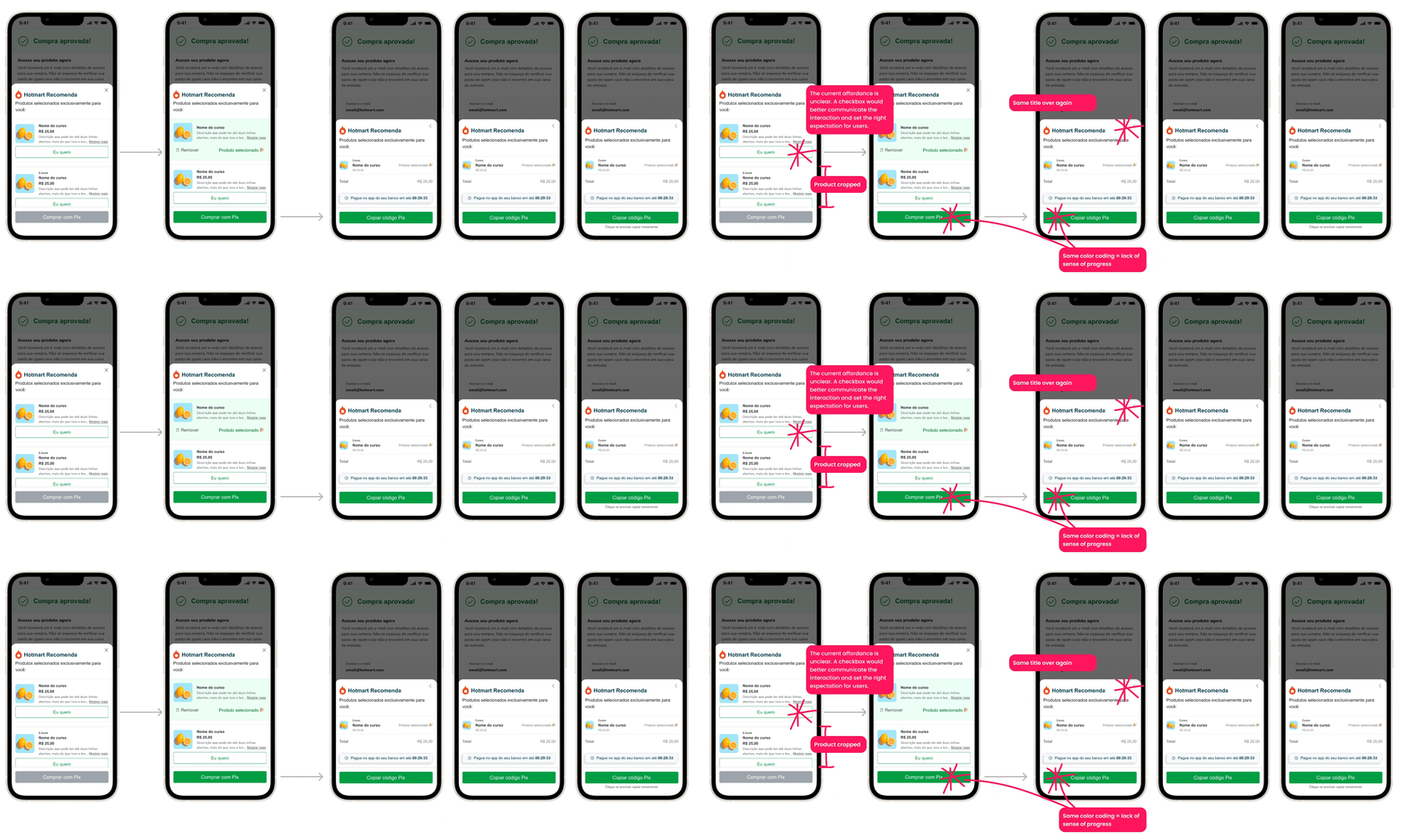
Friction mapping and UI errors via session analysis.
Strategy: Behavioral Design & Co-creation
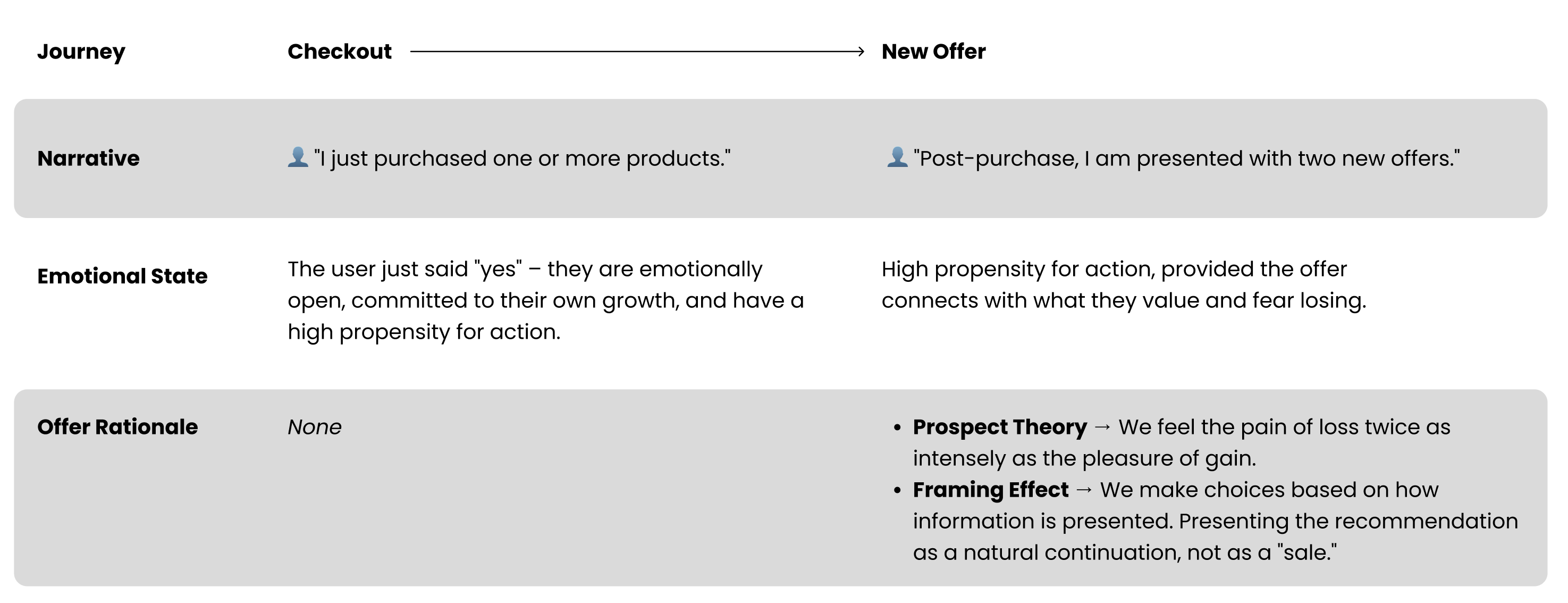
My role extended beyond simple bug fixing. I initially documented technical issues for engineering, but even after those fixes, the needle didn't move. Realizing a deeper strategic shift was needed, I facilitated a co-creation workshop with the design team to restructure the offer's narrative based on our findings.
Once we established a UX baseline that resolved the core affordance and cognitive load issues, I applied Prospect Theory and the Framing Effect to transform the copy from transactional to emotional.
From: "Buy this extra course" (Focus on cost/transaction)
To: "Don't stop your journey now" (Focus on loss aversion and progress)
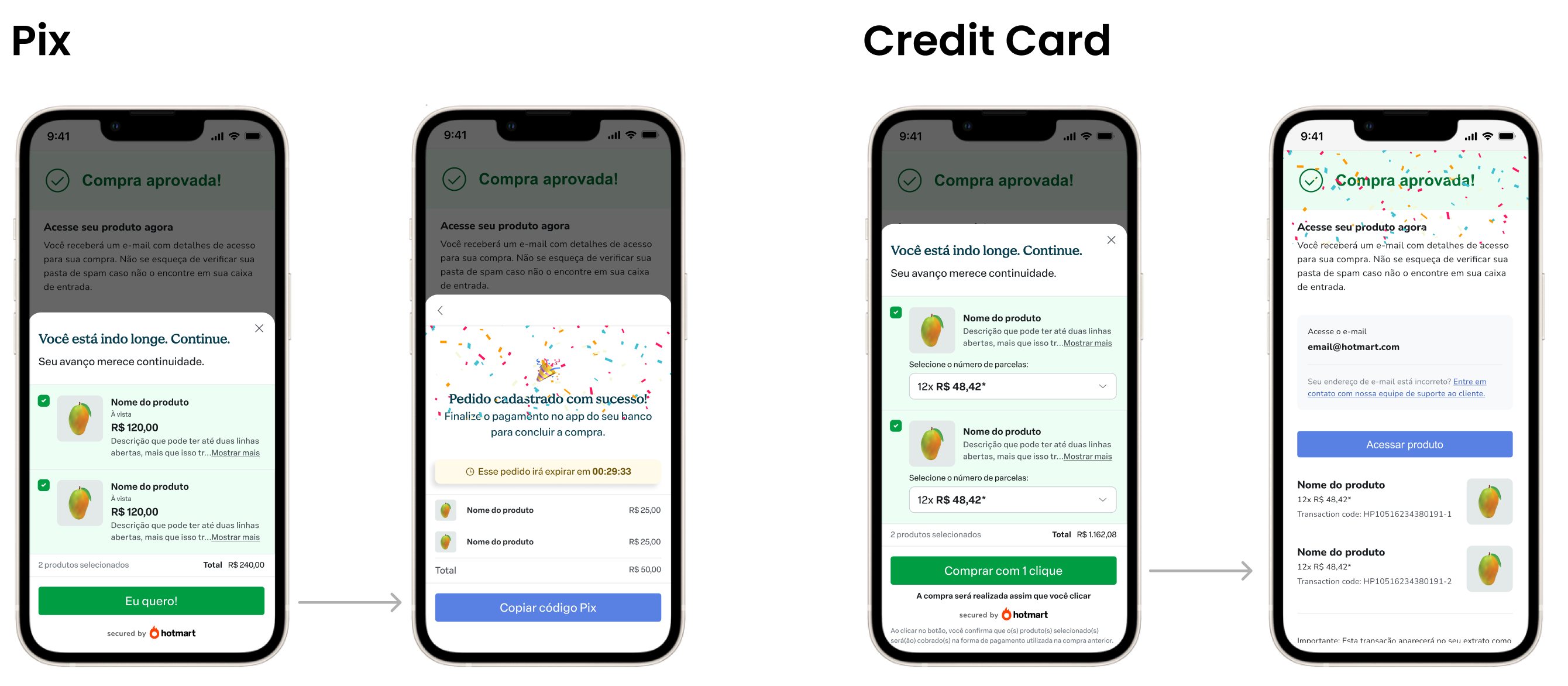
Experiment Results
Business Impact:
🚀 +225% Net GMV/Session (Credit Card)
The experience redesign didn't just solve the PIX usability friction—it unlocked massive revenue within the credit card flow.
Results Breakdown by Payment Method:
💠 PIX (The Challenge): A +145% surge in conversion rate (from 0.9% to 2.2%), validating the hypothesis that the legacy interface eroded trust.
💳 Credit Card (The Opportunity): A +137% increase in conversion (from 3.8% to 9.0%), proving that clarity and behavioral design drive sales, regardless of the payment method.